
Answer Engine Optimization for Hawaii Companies

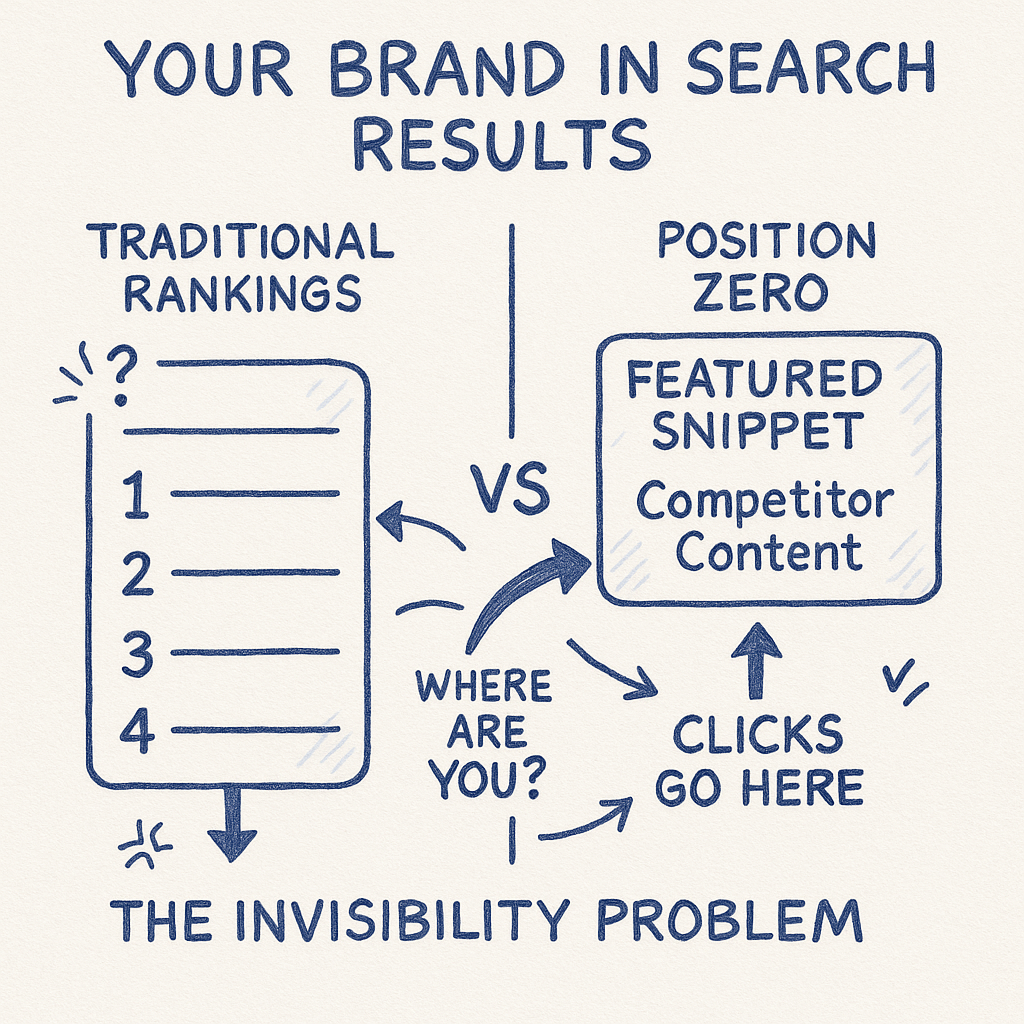
Your competitors are already dominating Google's featured snippets and AI summaries. When someone searches for a solution, their brand is the answer, not yours.
In Hawai'i, this matters more than anywhere else. A visitor asks Google, "best poke near Waikīkī." A parent in Pearl City asks Siri, "ABA therapy near me." A contractor on Maui searches, "how to calculate project ROI." If your content is not structured for answer capture, you are invisible.
Featured snippets receive up to 35% of clicks when they appear. AI summaries, voice assistants, and knowledge panels deliver answers without a click at all. That is traffic and brand impressions your competitors capture while your content sits buried below the fold.
What Answer Engine Optimization Really Means
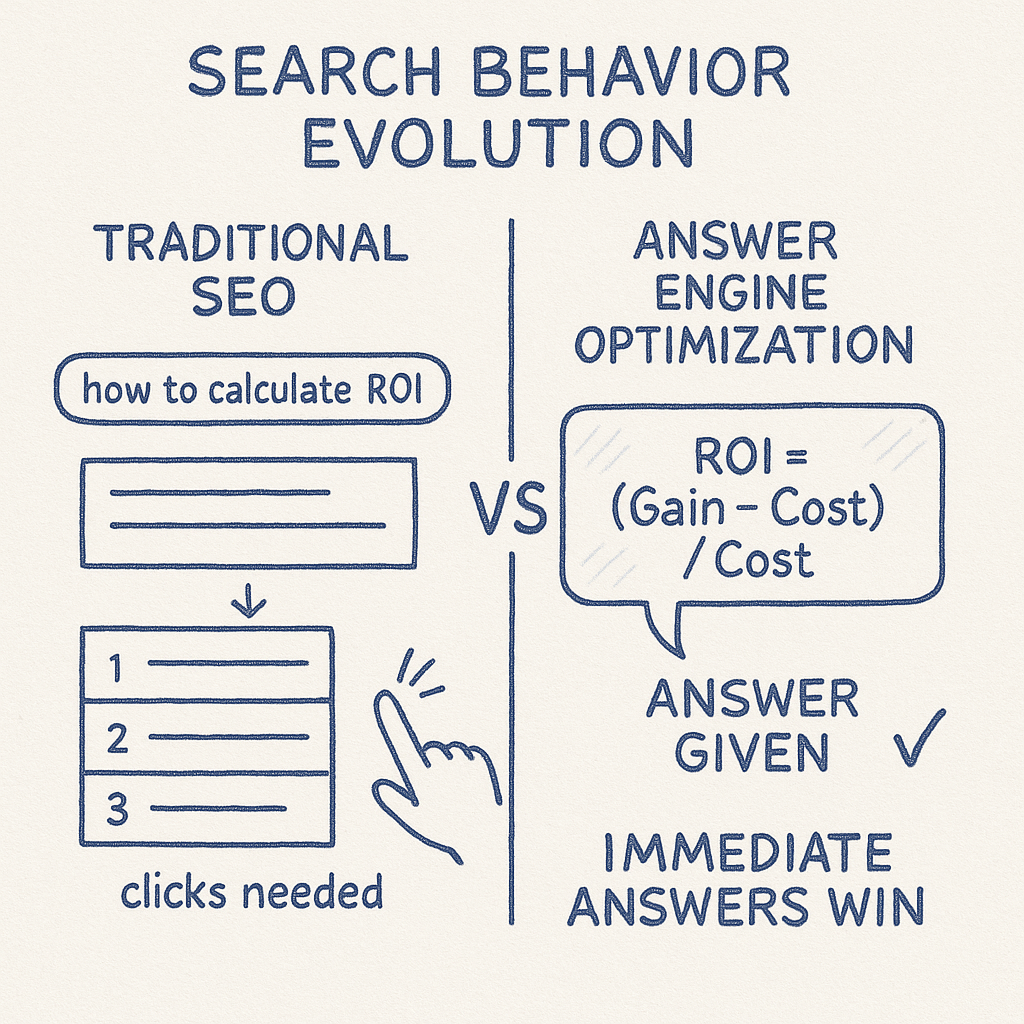
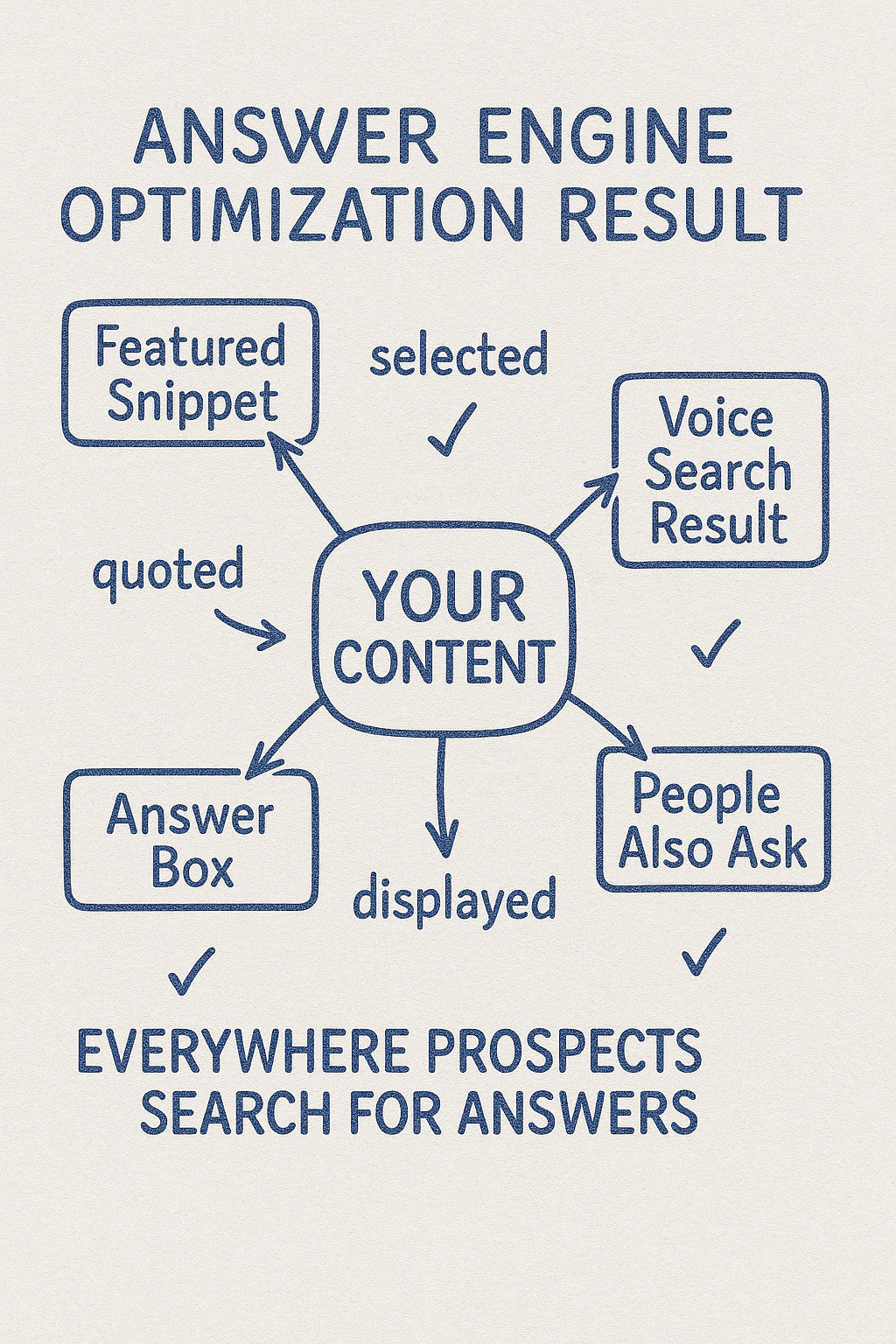
Answer engine optimization is the practice of structuring your content to capture direct answers across platforms where people ask questions: Google's featured snippets, knowledge panels, and People Also Ask boxes. Voice assistants that pull from search results. AI platforms like ChatGPT, Perplexity, and Claude that generate answers without traditional search. Traditional SEO focuses on ranking in the ten blue links. Answer engine optimization services make your content appear as the direct answer above all other results, while generative engine optimization trains AI systems to cite your expertise in entirely new contexts.
Traditional SEO tries to climb the "ten blue links." AEO makes your business the answer itself.
Someone searches "how to create a marketing budget." If you rank third, you are ignored. If you hold the snippet, you get the click, the authority, and the traffic.
For Hawai'i businesses, this means beating OTAs, mainland chains, and review sites that siphon off local demand.
Companies approach this backward. They create comprehensive content and hope Google extracts something useful for answer boxes and summaries. Real AEO strategy starts with understanding exactly what questions trigger featured snippets and AI summaries in your industry. Then you craft content to capture those positions. This requires comprehensive content strategy that aligns question research with broader business objectives.
How Answer Engines Work Across Platforms
Answer engines operate differently depending on where people ask their questions.
Google's answer features include featured snippets, People Also Ask boxes, and knowledge panels. These pull from search results and appear at the top of the page. When you search "best poke near Waikiki," Google shows a featured snippet with a direct answer before you see the list of websites.
Voice assistants like Siri, Google Assistant, and Alexa source their spoken answers primarily from featured snippet content. When someone asks their phone a question while driving through Honolulu, the answer they hear comes from whatever content captured the featured snippet position.
AI platforms like ChatGPT, Perplexity, and Claude generate answers by synthesizing information they've been trained on. Someone asks ChatGPT "where should I eat in Waikiki" without ever opening Google. The AI generates a response based on patterns in its training data. If your restaurant's content is clear and well-structured, it's more likely to appear in that generated answer.
The distinction matters for Hawaii businesses: Google optimization gets you featured snippets and voice search results. AI platform optimization (what we call Generative Engine Optimization) gets you cited in ChatGPT and Perplexity responses. Answer Engine Optimization focuses specifically on the answer features within search engines and voice assistants that pull from search.
The Traffic You're Missing
Everyone's chasing rankings. Featured snippets capture the clicks. AI summaries provide brand impressions, but result in fewer clicks.
Google processes over 8.5 billion searches daily. Featured snippets appear for up to 19% of all queries. That is more than one billion answer opportunities a day.
For Hawai'i companies, every one of those searches is contested:
- OTAs own searches like "best hotels on Maui."
- Yelp or TripAdvisor own "restaurants near Ala Moana."
- Mainland providers dominate "ABA therapy cost" or "marketing consultant Honolulu."
Without AEO, local businesses lose visibility in the exact moments when decisions are made.
Your competitors know this. You're debating whether featured snippets matter. They're capturing answer box after answer box in your industry.
Voice search makes this more critical. Someone asks Siri or Google Assistant a question. They get the featured snippet content read back as the answer. Your content isn't structured for snippet capture. You're invisible to the entire voice search audience.
We track companies that properly implement AEO techniques. Within six months, many capture snippets for 40 to 60% of their target questions. The impact on visibility is immediate.
Why Traditional SEO Agencies Miss This
SEO strategies treat featured snippets and answer summaries as a nice bonus rather than a primary objective. They'll work on broad keywords and hope to accidentally capture some answer positions. This misses how modern search behavior works.
People do not just search "digital marketing." They ask:
- "How much should a Honolulu café spend on ads."
- "What is the best project management software for a small construction firm on Kaua'i."
Generic content does not capture these questions. Hawai'i businesses need a strategy designed for snippet and voice search dominance.
The agencies selling traditional SEO packages don't understand AEO optimization. It requires different content strategy, different keyword research, and different success metrics. It's easier to sell keyword rankings than answer capture strategies.
Real AEO strategy starts with question research, not keyword research. You need to identify the specific questions triggering featured snippets in your industry. Then create content that search engines recognize as the best answer.
How Search Engines Select Featured Snippets and Voice Answers
Featured snippet algorithms prioritize content that directly answers the search query with clear, extractable information. This creates specific optimization opportunities that most businesses ignore because they focus on keywords instead of intent.
Search engines favor content that provides clear, extractable answers:
- Concise definitions for "what is" queries
- Numbered lists for processes
- Tables for comparisons
- Direct answers in the first 40 to 60 words of a section
You can outrank higher authority websites by formatting your answers better. We have seen local startups capture snippets from Fortune 500 companies simply because their answers were structured for the algorithm.
For Hawai'i businesses, this levels the playing field. You do not need the biggest domain authority. You need the clearest answer.
What Actually Works in Hawai'i
Most guides talk about adding FAQ sections or plugging in schema markup. Those tactics help, but they are only the surface. Real results in Hawai'i come from understanding how people here search—both visitors and residents—and then structuring content to answer those questions directly.
Mainland competitors and OTAs dominate generic queries like "best hotels" or "marketing budget template." They rarely cover what matters most to island businesses. That leaves gaps that Hawai'i companies can own:
Tourism intent: Visitors ask "best snorkeling tour Big Island" or "things to do near Pearl Harbor". If a local tour operator or attraction structures its content with the right tables, lists, and concise answers, it can capture those snippets ahead of national sites.
Local services: Families search "ABA therapy Honolulu" or "Pearl City dentist hours". These questions often have no strong featured answer. A clinic that builds direct, extractable responses can win both visibility and trust.
Island-specific B2B: Contractors might ask "best project management software for a small firm on Kaua'i". A mainland article might explain project management software in general, but a Hawai'i business that contextualizes tools for local conditions can secure the snippet.
Understanding search intent at this level makes the difference. "Best poke near Waikīkī" demands a list with locations. "What is poke" works as a concise definition. The format has to match the intent, and in Hawai'i those intents split between visitor discovery and resident decision-making.
Companies that see 200 to 300 percent increases in snippet capture are not recycling old blog posts. They are creating new content categories designed for answer engine visibility, tuned to how people actually search when they are on island.
Voice Search in Hawai'i
Voice assistants source 41 percent of their answers from featured snippets. That means the same mechanics driving desktop snippets are also powering what people hear when they ask their phones a question.
In Hawai'i, voice search is not just convenience. It is often the primary way decisions get made:
Tourism queries: Visitors walking through Waikīkī ask "coffee near Diamond Head" or "best shave ice in Kailua." The phone reads back a snippet. If it is not your café or shop, the opportunity goes elsewhere.
Local family decisions: Parents in Kapolei ask "ABA therapy near me" while driving. If your clinic has not structured content for snippet capture, the referral goes to a competitor that has.
On-the-go services: Residents commuting on O'ahu ask "is the HART rail open today". A local answer structured for voice is far more valuable than a generic transit explainer from the mainland.
Voice queries are conversational. People speak in full questions, not keyword fragments. They use natural phrasing like "what is the best" or "how do I find." AEO for voice in Hawai'i means creating content that sounds natural when read aloud and is structured for direct extraction.
The companies preparing for this shift are already pulling ahead. Tour operators capturing "best snorkeling tour Big Island" in featured snippets are the same ones whose answers Siri and Google Assistant read aloud. Clinics surfacing for "speech therapy Honolulu" become the trusted name before a parent ever clicks.
Beyond Search Engine Answers: AI Platform Context
While Answer Engine Optimization focuses on featured snippets and voice search within search engines, it's worth understanding where answer engines end and generative AI begins.
Answer engines work within search: featured snippets, People Also Ask boxes, knowledge panels, voice assistant responses that pull from search results. The content that ranks in traditional search is what gets extracted for these answer positions.
Generative AI platforms like ChatGPT, Perplexity, and Claude operate outside search entirely. Someone asks ChatGPT "what's a good marketing consultant in Hawaii" without ever opening a browser. The AI generates a response based on patterns in its training data, not by searching the web in real-time.
The optimization approaches differ:
AEO structures content for search engine extraction—the right heading hierarchy, clear answer formats in the first 40-60 words, tables and lists that search algorithms can parse.
GEO (Generative Engine Optimization) makes content citation-worthy for AI platforms—demonstrating genuine expertise, unique perspectives, clear methodologies that language models recognize as authoritative.
For Hawaii businesses, you need both. AEO captures the visitor asking Google or Siri "best poke near Waikiki." GEO captures the prospect asking ChatGPT or Perplexity for Hawaii business recommendations without using search.
Most businesses focus exclusively on traditional search optimization and miss both answer engines and AI platforms. Learn more about Generative Engine Optimization for AI platform visibility beyond search.
Implementation in Hawai'i That Matters
Answer Engine Optimization requires specific technical execution beyond traditional on-page SEO. How content is structured, how headings are organized, and where answers are placed all influence whether search engines pull your material into a snippet.
For Hawai'i businesses, these technical choices determine if a local tour company, café, or clinic can outmaneuver national competitors and OTAs.
Direct answers first: Search engines typically extract featured snippet content from the first 40 to 60 words of an answer section. A Big Island snorkel tour operator can secure the snippet for "best snorkeling tours near Kona" by front-loading a concise definition before any supporting details.
Heading hierarchy: Using H2 tags for main questions and H3 for sub-questions signals answer hierarchy. A Honolulu dental clinic that formats content around "What services do you provide" and "How much does a cleaning cost" makes it easier for search engines to lift those answers into People Also Ask boxes.
Structured formats: Tables for comparisons, numbered lists for processes, and bullet points for features consistently increase snippet capture probability. A Maui contractor who builds a table comparing project management software for small island firms is more likely to outrank mainland blogs for "best project management software Kaua'i."
Implementation in Hawai'i is about more than checklists. It is about understanding which queries locals and visitors are asking, then building content that is both structurally sound and locally relevant. This combination moves your answers into the positions where decisions are made.
Measuring What Matters in Hawai'i
Traditional SEO metrics like rankings and backlinks do not capture whether your business is winning in the answer economy. To evaluate Answer Engine Optimization properly, you need to measure featured snippet positions, knowledge panel appearances, and People Also Ask inclusions separately from standard rankings.
For Hawai'i companies, this level of measurement does more than prove performance. It shows whether local businesses are keeping visibility on island or losing it to national publishers, OTAs, and mainland competitors.
Snippet capture rate: Tracking the percentage of Hawai'i-specific queries where your business holds the answer, from "best poke near Waikīkī" to "ABA therapy Honolulu."
Answer box impressions: Understanding how often your content surfaces for local intent searches like "coffee near Ala Moana" or "surfboard rentals Waikīkī."
Voice search visibility: Measuring whether Siri, Google Assistant, or Alexa is reading back your content when people ask spoken questions on the go.
We track featured snippet performance across hundreds of question keywords for our clients. The data shows consistent patterns: certain answer formats, lengths, and structures outperform others. In Hawai'i, these measurements reveal how much opportunity is being captured by local businesses versus siphoned off by OTAs and mainland brands.
When you can see which answers you already own, which you are losing, and which have no strong coverage yet, you gain the roadmap to expand your presence.
The Reality in Hawai'i
In every industry we analyze, a small group of companies capture the majority of featured snippets. Their competitors remain invisible in answer search. This is not random. It is strategic.
In Hawai'i, the stakes are sharper. National publishers, OTAs, and mainland agencies are already claiming the answer boxes that guide visitor spending and local decision-making. A handful of local players have begun to compete, but the majority of island businesses are still absent.
If you are not pursuing Answer Engine Optimization, you are handing traffic, impressions, and customer trust to organizations outside Hawai'i. Local visibility is not guaranteed simply because you operate here. It has to be won at the level of structured, answer-ready content.
Featured snippet competition is still less intense than traditional keyword competition. Most businesses do not understand systematic answer optimization. The window for establishing answer dominance in Hawai'i remains open, but it is closing as larger players move in.
Plate Lunch Collective: Hawai'i's Answer Engine Partner
Plate Lunch Collective is the only consultancy in Hawai'i built specifically for the retrieval layer: featured snippets, answer engines, generative AI, and voice search.
Local expertise: We understand how kama'āina and visitors phrase their questions differently.
AI native: Our services go beyond SEO into Generative Engine Optimization and broader retrieval-layer marketing.
Integrated strategy: AEO is not an add-on. We align it with your brand voice, content system, and business goals.
Your competitors are already fighting for Hawai'i's most valuable digital real estate. Do not let OTAs, review sites, and mainland brands own the answers your customers are asking.
Start Winning Hawai'i's Answer Boxes
Plate Lunch Collective helps Hawai'i companies surface as the answer in search engines, in AI systems, and in voice search.
Whether you are a restaurant in Honolulu, a healthcare clinic in Pearl City, a tour operator on Maui, or a contractor on Kaua'i, your visibility depends on owning the answers people rely on to make decisions.
Contact us today to begin your Answer Engine Optimization strategy. Keep Hawai'i searches connected to Hawai'i businesses.
Frequently Asked Questions
What is Answer Engine Optimization?
Answer Engine Optimization (AEO) is the practice of structuring your content so search engines and voice assistants surface your business in featured snippets, knowledge panels, People Also Ask boxes, and voice search results. For Hawai'i companies, this means capturing both visitor queries like "best poke near Waikīkī" and local intent searches such as "ABA therapy Honolulu."
How is AEO different from SEO?
SEO helps you appear in search results. AEO makes your business the answer itself. In Hawai'i, that means not just ranking on page one, but being the snippet Siri reads aloud when someone asks "coffee near Diamond Head."
Who benefits in Hawai'i?
Any business that relies on discovery benefits from AEO. Restaurants, tour operators, and attractions capture visitor demand. Healthcare clinics, ABA providers, and professional services connect with local families. Retailers and franchises compete more effectively with mainland chains.
How long does it take?
Most Hawai'i clients begin capturing featured snippets within three to six months. Voice search visibility and AI summary citations often follow once the right answer formats are in place.
Do I still need SEO?
Yes. SEO builds discoverability, while AEO delivers authority at the point of decision. For Hawai'i businesses, the two work together: SEO ensures you appear in results, AEO ensures you surface in the answer box where the customer actually stops searching.
How does AEO differ from Generative Engine Optimization?
AEO focuses on answer features within search engines—featured snippets, People Also Ask boxes, voice search results that pull from search. GEO focuses on AI platforms like ChatGPT and Perplexity that generate answers outside of traditional search. Most businesses need both for comprehensive visibility.
Related Services
Generative Engine Optimization
Optimize your content to appear in AI-generated responses and summaries.
Modern SEO Services
AI search and intent networks that adapt to evolving search behaviors.
Market Research & Customer Insights
Ground your AEO strategy in data-driven user intent and behavior analysis.
Step above the silos.
Individual services solve problems. Our Fractional CMO service orchestrates the whole system.